


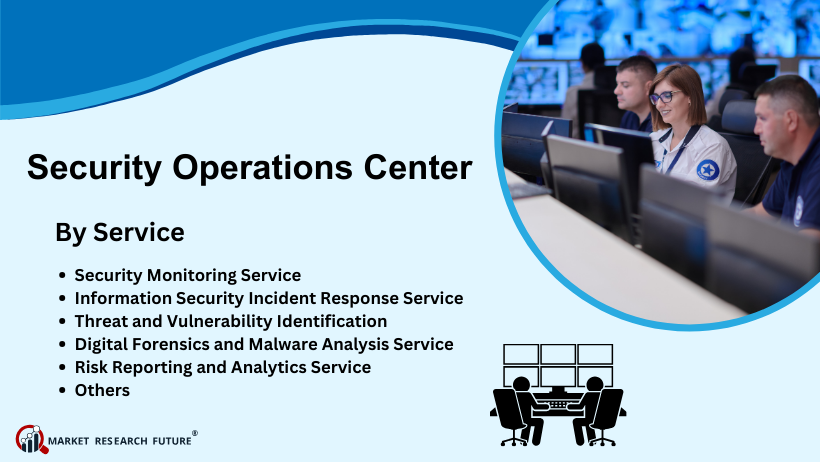
In today's hyper-connected digital landscape, a robust defense against cyber threats is no longer a luxury but a necessity for survival. The central nervous system of this defense is the Security Operation Center (SOC), a dedicated facility where an organization's security posture is continuously monitored, analyzed, and defended. This command center brings together people, processes, and technology to prevent, detect, analyze, and respond to cybersecurity incidents. The critical importance of this function is reflected in the market's strong growth prospects; the industry is expected to expand to a significant $104.15 billion by 2035, driven by a steady compound annual growth rate (CAGR) of 8.22% between 2025 and 2035. This steady expansion underscores the universal recognition that a proactive and centralized security hub is indispensable for protecting valuable digital assets against an ever-evolving threat landscape.
The effectiveness of a SOC hinges on its three foundational pillars: people, processes, and technology. The 'people' element comprises a skilled team of security professionals, including Tier 1 analysts for initial triage, Tier 2 responders for deeper investigation, and Tier 3 experts for advanced threat hunting and forensics. The 'processes' pillar provides the structured framework for their actions, outlining clear procedures for incident detection, analysis, containment, eradication, and recovery. These documented playbooks ensure consistent and efficient responses, minimizing chaos during a crisis. The 'technology' pillar consists of the toolset that empowers the team, including Security Information and Event Management (SIEM) systems for log aggregation, threat intelligence platforms for context, and Security Orchestration, Automation, and Response (SOAR) tools to streamline workflows, creating a cohesive defense mechanism.
The primary function of a SOC is 24/7/365 monitoring and vigilance. Security analysts continuously watch over an organization's networks, servers, endpoints, and cloud environments, searching for any signs of malicious activity. They correlate data from diverse sources to identify anomalies, investigate potential threats, and differentiate false positives from genuine incidents. This proactive stance is crucial for early detection, which can significantly reduce the potential damage and cost of a security breach. Beyond real-time monitoring, a mature SOC also engages in proactive threat hunting, where analysts actively search for hidden threats that may have bypassed automated defenses. This shifts the security paradigm from a reactive to a proactive model, actively seeking out adversaries before they can achieve their objectives.
Once a credible threat is identified, the SOC's incident response function kicks into high gear. This involves a coordinated effort to contain the threat, preventing it from spreading further across the network. Following containment, the team works to eradicate the threat completely, removing all traces of malware or intruder access. The final steps involve recovery, restoring affected systems to normal operation, and conducting a post-incident analysis. This crucial review helps the organization understand the root cause of the breach, identify security gaps, and implement improvements to prevent similar incidents in the future. This continuous cycle of monitoring, response, and improvement is what makes the SOC a dynamic and essential component of modern enterprise cybersecurity strategy.
Explore Our Latest Trending Reports:

 English
 French
 Spanish
 Portuguese
 Deutsch
 Turkish
 Dutch
Dutch
 Italiano
 Russian
 Romaian
 Portuguese (Brazil)
 Tiếng Việt