


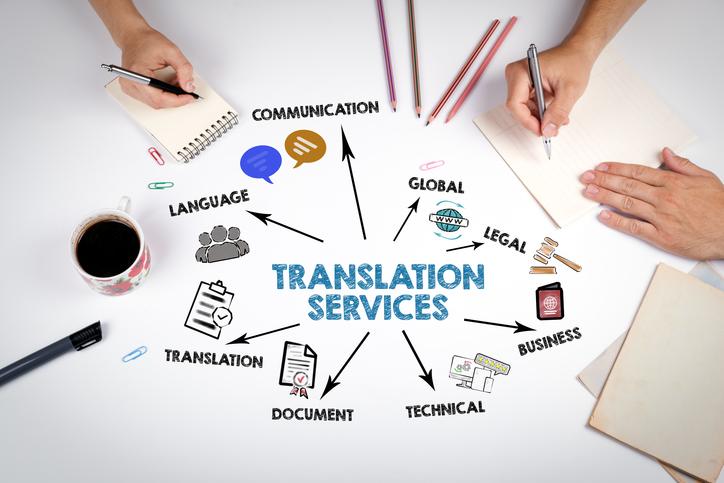
The Translation Service industry has undergone a remarkable transformation in recent years, driven by globalization, technological advancement, and the increasing need for cross-cultural communication across industries worldwide. As businesses expand their operations into international markets, the demand for accurate and culturally appropriate translation services has grown exponentially. Organizations across healthcare, legal, financial, technology, and entertainment sectors rely heavily on professional translation services to communicate effectively with diverse audiences. The rise of digital commerce has further amplified this demand, as companies seek to localize their websites, applications, and marketing materials for consumers speaking different languages across multiple regions. Machine translation technologies powered by artificial intelligence have revolutionized the industry, offering faster turnaround times while complementing human translators in handling massive volumes of content. The industry encompasses various service types including document translation, interpretation, localization, transcription, and subtitling that serve different communication needs for organizations globally.
The translation service industry has evolved from a predominantly manual profession to a technology-enhanced sector that leverages sophisticated tools and platforms to improve quality and efficiency. Computer-assisted translation tools, translation memory systems, and terminology management databases have become essential components of professional translation workflows worldwide. These technologies help translators maintain consistency across large projects while reducing repetitive work and improving overall productivity significantly. Neural machine translation has achieved remarkable accuracy improvements in recent years, particularly for common language pairs and general content types. However, human expertise remains indispensable for specialized content requiring deep subject matter knowledge, cultural sensitivity, and creative adaptation. The integration of artificial intelligence with human translation capabilities has created a hybrid approach that maximizes both speed and quality for clients.
The industry landscape includes diverse service providers ranging from large multinational language service companies to individual freelance translators operating independently across the globe. Major language service providers such as TransPerfect, Lionbridge, and RWS Holdings have established global operations with thousands of linguists covering hundreds of language combinations. Mid-sized translation companies often specialize in specific industries or language pairs, offering deep expertise that larger competitors may struggle to match. The freelance translator community represents a significant portion of the industry's workforce, providing flexibility and specialized knowledge across numerous subject domains. Industry associations including the American Translators Association and the International Federation of Translators establish professional standards and certification programs that help maintain quality across the profession. The competitive dynamics within the industry continue to evolve as technology disruption creates both challenges and opportunities for service providers of all sizes.
Looking toward the future, the translation service industry is poised for continued growth and transformation as global communication needs become increasingly complex and diverse. The expanding volume of digital content, estimated to grow exponentially each year, creates enormous demand for translation and localization services across multiple platforms and formats. Emerging technologies including real-time speech translation, augmented reality translation, and automated video dubbing are opening new market segments and service categories. The growing importance of minority and indigenous languages in cultural preservation efforts is creating specialized demand for translation services in previously underserved language pairs. Regulatory requirements for multilingual communication in healthcare, legal, and government contexts continue to expand, providing stable demand drivers for professional translation services. The industry's ability to adapt to changing technology while maintaining the human expertise necessary for quality communication positions it well for sustained growth.
Explore More Like This in Our Reports:

 English
 Arabic
 French
 Spanish
 Portuguese
 Deutsch
 Turkish
 Dutch
Dutch
 Italiano
 Romaian
 Portuguese (Brazil)
 Tiếng Việt