


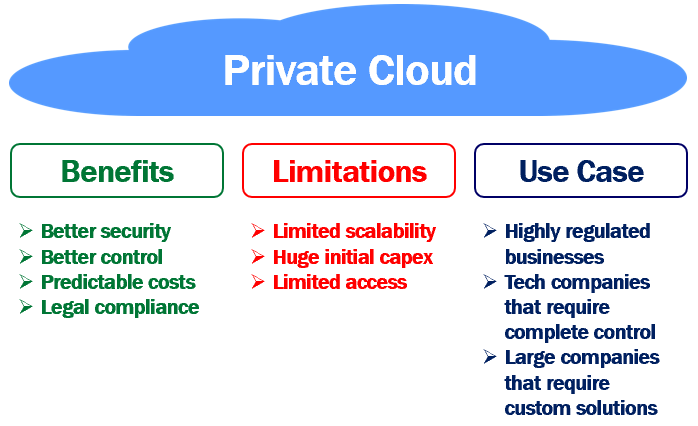
The technological underpinnings of a private cloud are what transform a collection of hardware into a dynamic, agile, and automated IT environment. The modern Private Cloud Services Market Platform is an intricate stack of software and hardware designed to deliver resources on-demand with robust security and management capabilities. At the very foundation is the hardware layer, comprising compute servers, storage arrays (like SAN or NAS), and networking equipment (switches and routers). However, the true power of the private cloud is unlocked by the virtualization layer that sits on top of this hardware. Hypervisors such as VMware vSphere, Microsoft Hyper-V, or the open-source Kernel-based Virtual Machine (KVM) are used to abstract the physical resources and create a pool of virtual machines (VMs). This virtualization is the cornerstone of cloud computing, enabling multiple operating systems and applications to run on a single physical server, thereby maximizing hardware utilization, improving energy efficiency, and providing the flexibility to spin up or tear down virtual servers in minutes. This layer effectively decouples the software from the underlying hardware, which is the first and most critical step in building an elastic and resilient cloud infrastructure that can respond dynamically to business demands.
Above the virtualization layer resides the crucial cloud management and orchestration platform. This is the "brain" of the private cloud, providing a unified interface for administrators to manage the entire infrastructure and for end-users to provision resources through a self-service portal. Prominent platforms in this space include VMware's vRealize Suite, Microsoft System Center, and open-source solutions like OpenStack and CloudStack. These platforms are responsible for automating complex workflows, such as provisioning VMs, configuring networks, and allocating storage. They also handle critical functions like monitoring performance, ensuring high availability, implementing security policies, and tracking resource usage for metering and chargeback. The orchestration engine is what enables the "cloud-like" experience, translating a user's request for a specific service (e.g., a web server with certain CPU, RAM, and storage) into a series of automated tasks that configure and deploy the necessary resources without manual intervention. The sophistication of this management layer is often what differentiates a true private cloud from a simple virtualized environment, as it provides the automation, agility, and self-service capabilities that define cloud computing.
In recent years, the platform technology has evolved beyond traditional virtual machines to embrace containerization, with Docker and Kubernetes emerging as de facto standards. Containers offer a more lightweight and portable way to package and run applications compared to VMs. Instead of virtualizing an entire operating system, containers virtualize the OS kernel, allowing applications to run in isolated user spaces. This results in faster startup times, higher density (more containers can run on a single host than VMs), and consistent application behavior across different environments. In a private cloud context, Kubernetes serves as the container orchestration platform, automating the deployment, scaling, and management of containerized applications. Integrating Kubernetes into the private cloud platform allows organizations to build and run modern, microservices-based applications with the same level of security and control they have for their traditional VM-based workloads. This evolution ensures that private clouds remain relevant and capable of supporting a diverse range of application architectures, from monolithic legacy systems to cloud-native microservices.
The final component of a comprehensive private cloud platform is the robust integration of security and networking services directly into the stack. Modern platforms utilize software-defined networking (SDN) and micro-segmentation to create granular security policies that isolate workloads from one another, even if they are running on the same physical host. Technologies like VMware NSX or OpenStack Neutron allow administrators to define network and security rules in software, which are then enforced at the hypervisor level. This "zero-trust" security model is far more effective than traditional perimeter-based security, as it prevents the lateral movement of threats within the data center. Additionally, these platforms incorporate features for identity and access management (IAM), encryption of data at rest and in transit, and integrated monitoring tools that provide deep visibility into application and infrastructure performance. This deeply embedded, software-defined approach to security and networking is what truly hardens the private cloud platform, enabling it to meet the stringent compliance and data protection requirements of modern enterprises and cementing its status as a secure, enterprise-grade solution.
Explore More Like This in Our Regional Reports:
Germany Construction Software Market

 English
 Arabic
 French
 Spanish
 Portuguese
 Deutsch
 Turkish
 Italiano
 Russian
 Romaian
 Portuguese (Brazil)
 Tiếng Việt